
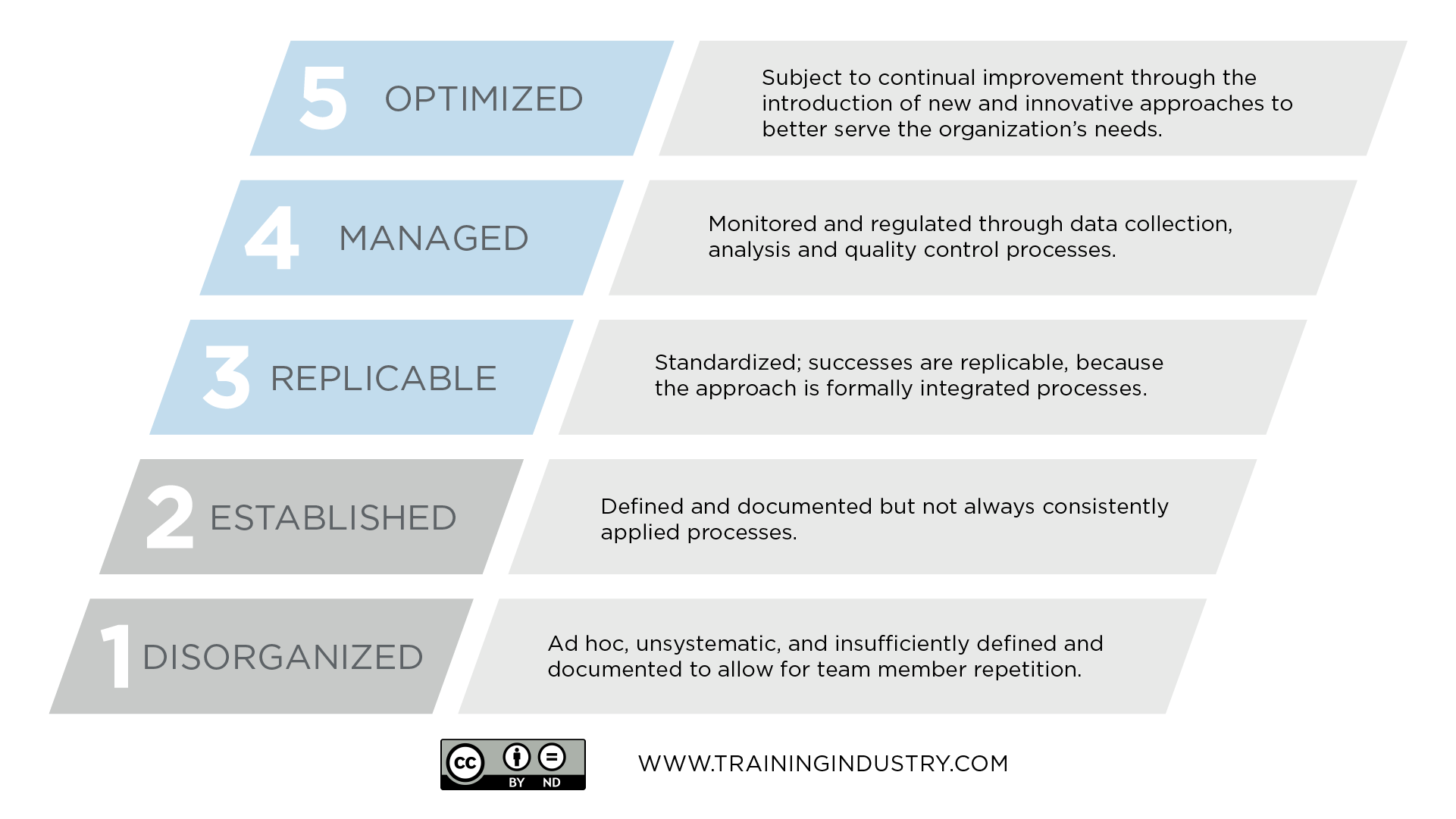
The Training Organization Maturity Model is a framework developed to help training and learning and development (L&D) professionals assess the maturity of their training process capabilities. The model provides a structured way to evaluate how consistently, effectively and strategically training activities are designed, delivered and managed across an organization (Figure 1).
Figure 1. Training Organization Maturity Model
By identifying their current level of maturity, training teams can better understand strengths, gaps and opportunities for improvement, and prioritize actions that align training efforts with organizational needs.
8 Essential Capabilities of High-Performing Training Organizations
Since 2008, Training Industry, Inc. has collected data from training professionals across industries to understand what makes high-performing training organizations successful. After over a decade of research, eight process capabilities were identified that, when optimized, make training organizations great:
- Strategic Alignment: Creating training programs that align with business goals and objectives.
- Content Development: The process of assessing, designing, managing and maintaining training content.
- Delivery: Managing instructor networks and delivering training through multiple learning modalities.
- Diagnostics: Identifying the cause of performance problems and recommending solutions.
- Reporting and Analysis: Defining business metrics and using data to improve training programs.
- Technology Integration: Integrating learning technologies with each other and/or other business applications.
- Administrative Services: A group of processes that include scheduling, registration, technology and other support functions.
- Portfolio Management: Managing, rationalizing and maintaining large portfolios of training programs.
Purpose of the Training Organization Maturity Model
The Training Organization Maturity Model is designed to:
- Provide a common language for discussing training effectiveness and capability
- Help training organizations benchmark their current practices
- Guide continuous improvement of training processes and outcomes
- Support the transition from ad hoc training delivery to a more strategic, data-informed function
Maturity Levels
The model consists of five levels, representing increasing degrees of structure, consistency and effectiveness in training practices.
Level 1: Disorganized
Training practices are ad hoc, unsystematic and insufficiently defined or documented to allow for consistent repetition by team members.
Level 2: Established
Training processes are defined and documented, but they are not always applied consistently across the organization.
Level 3: Replicable
Training practices are standardized, and successes are replicable because the approach is formally integrated into organizational processes.
Level 4: Managed
Training activities are monitored and regulated through data collection, analysis and quality control processes.
Level 5: Optimized
Training practices are subject to continuous improvement through the introduction of new and innovative approaches to better serve the organization’s needs.
How to Use the Training Organization Maturity Model
Training professionals can use the model as a diagnostic tool to:
- Assess current training practices across teams or functions
- Identify gaps between current and desired maturity levels
- Inform training strategy, process improvements and capability-building efforts
- Track progress over time as training practices evolve
Related Content:
- What Makes a Great Training Organization? A Handbook of Best Practices
- 10 Best Practices for Leading a Great Training Organization
- The 8 Capabilities of Great Training Organizations
- Certified Professional in Training Management Program
- [Podcast] Great Training Starts With a Plan — Real-World Tips for Strategic Planning